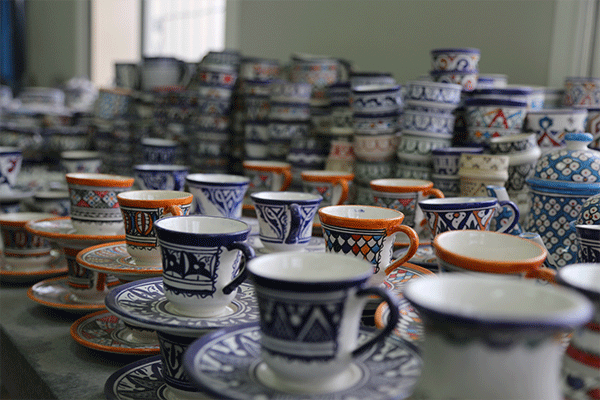
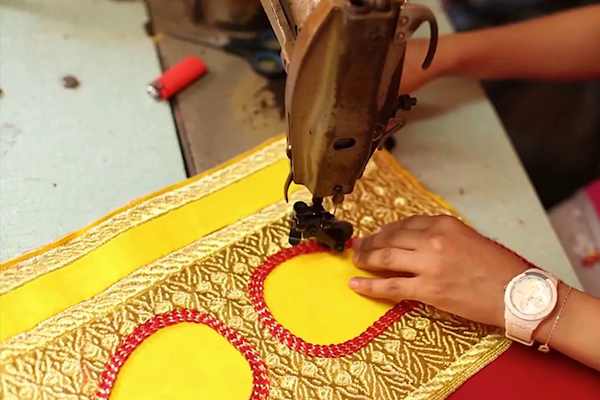
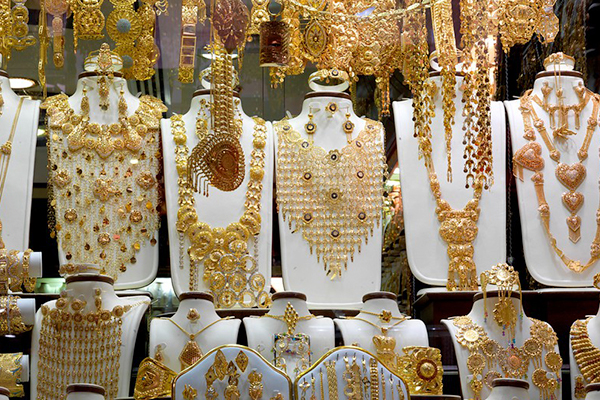
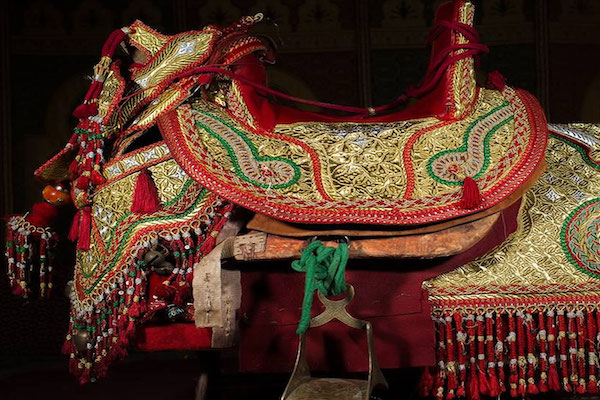
Far from being a simple city museum, nicknamed once « the Athens of Africa», it owes much of its vitality to its countless maâlems: Its master artisans exercise their talent and creativity in several areas and have made the reputation of Fez well beyond the Moroccan borders. By heading to discover Fez, its Medina, and its Souks, you will meet a fascinating universe made of art, history, faith, and traditions. Embroidery is an ancient Moroccan tradition, which is why each region, or even city, has its own style. Stitch embroidery or Fassie embroidery, which refers to the city of Fez, is part of the traditional ancestral crafts. The monochrome Fez embroidery unfolds in blue, red, black, or garnet with geometric and floral motifs. Copperware appeared in Morocco in the twelfth century and became a real specialty from the fourteenth century. The craftsmen melt the metal, then hammer or chisel it to make functional and decorative objects, fascinating fruits of the genius and know-how of the Moroccan Maâllems: round trays « Soigni », teapots, candlesticks, lighting, etc. The term « Maroquinerie » as to « Leather goods» in french, finds its direct etymology in Morocco, where leather work was very sophisticated, especially in Fez of the Almohad period. Leather products are an ancient tradition and this profession is characterized by a variety of products such as slippers, belts, clothing, handbags, suitcases, bags and wallets, etc. The traditional ceramic craft requires special skills and in-depth knowledge of the different stages of the production process. The traditional manufacture of brocade is one of the oldest trades in Fez. It was brought by artisans from Andalusia and merged with Moroccan culture and art. Fassi men had been the first to wear this fabric to make caftans (Melss), thus marking their belonging to the aristocracy. After the disappearance of this male caftan, it was taken over by the Moroccan woman who used it for making clothes, interior decoration, etc. Fez remains the city that made the greatness of Moroccan pottery. Of very ancient origin, the ceramics of Fez are recognizable by their predominantly cobalt blue decoration, the city’s color, and the motifs that combine green and yellow gold. At the time of the Almohads, in the 13th century, there were no less than 180 potters in Fez. There are still about fifty pottery bosses who each employ four or five workers and apprentices. Traditional sewing is one of the crafts that can be developed and brought up to date; it has accompanied the cultural evolution and has preserved the Moroccan authenticity reflected in the traditional Moroccan costume. Traditional couture has been enriched over time thanks to the different cultures it has rubbed shoulders with, especially those that have left their mark on it, such as Amazigh, Arab, Andalusian, Saharawi, Muslim, and Jewish touch. The city of Fez has been known for centuries as an important center of crafts and art trades and jewelry has occupied an important place among these trades. The jewels of the Fassi woman consist of: a gold crown set with precious stones, a face decorated with pearls and precious green stones (wind string), chest adornment (buttons), ribbons of the dress embroidered with gold thread, and finally a bodice inserted with white and green pearls. The Moroccan has consistently forged a close bond with the horse. The interest to enhance the beauty of horses and their appearance was and remains vital on occasions such as festivals and moussems. The saddlery of horses is also one of the craft trades, the most ancestral, having made the celebrity of Moroccan craftsmen since antiquity, a facing that makes Moroccan riders compete for the splendor and prestige it confers on the mount. Moroccans are known in the traditional blacksmith trade and fassi in particular. They made the tools necessary for the agricultural field such as horseshoes, for the construction field such as axes, shovels, and hammers, for furnishings such as shelves, etc. Today, artisans excel in wrought iron art products. A wide range of Moroccan handicraft products is available in Fez, to onlookers and visitors, including the carpets in the spotlight in the Medina. Original and complex patterns, sometimes in the center and sometimes at the edges according to the uses, provoke a great reflection on their designs. Wood carving is a very present art in the landscape of Moroccan craftsmanship. It is also the only creative craft that can be found only in Morocco. Artisanship
Discover the Fassi craftsmanship in the souks of the Medina of Fez!
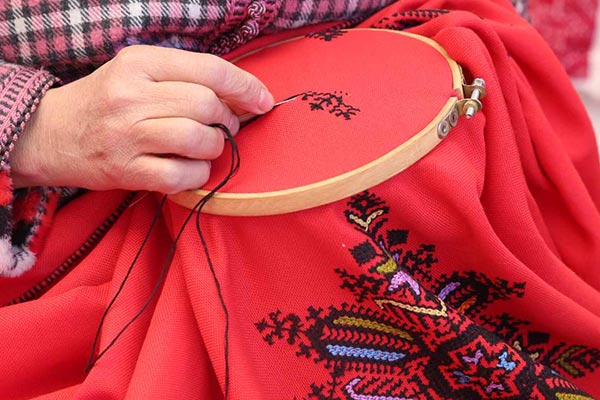
Embroidery
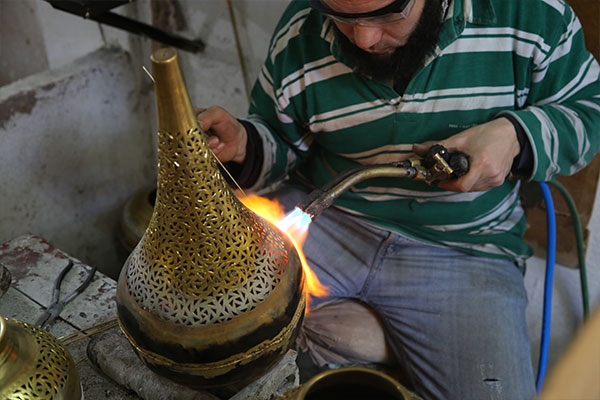
Copperware
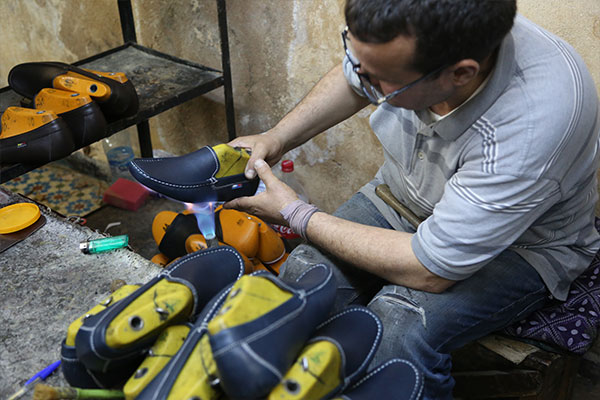
Leather goods (Maroquinerie)

Ceramics
It is a conventional ancestral creative profession that is very complex. It is one of the most expressive art forms related to Moroccan architecture. Moreover, it has been qualified by some ancient maalems as the best Arab profession to decorate grand buildings, palaces, mosques, etc.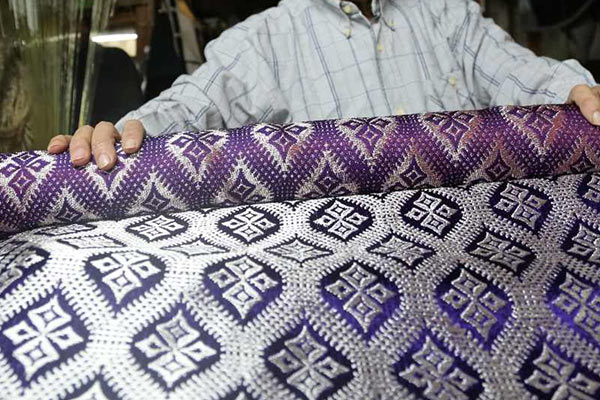
Brocade
Pottery
Traditional sewing
Jewelry making
The Traditional saddlery
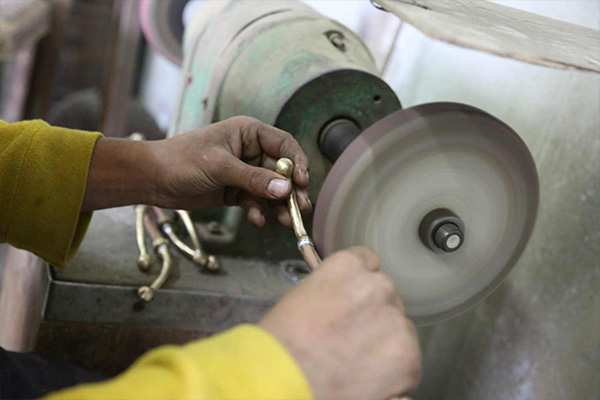
The Artistic ironwork
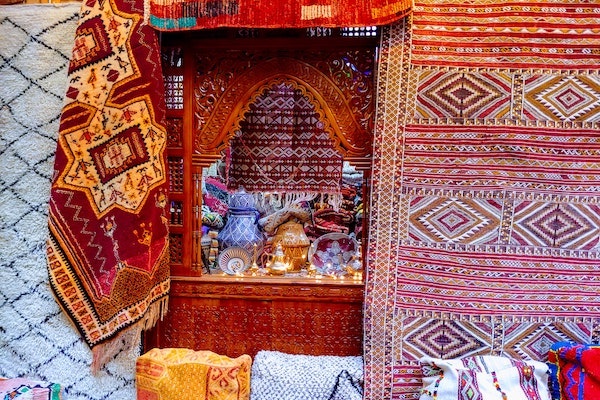
Carpets
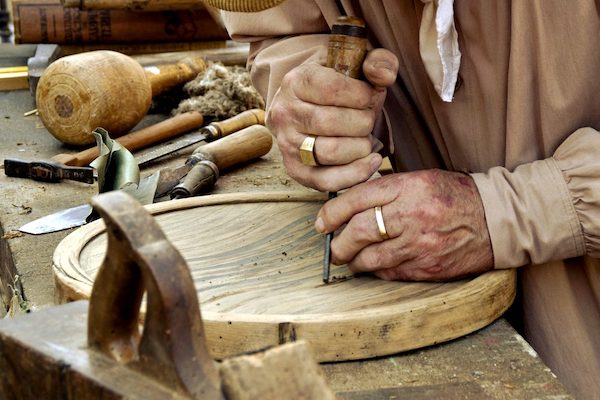
the wood carving
The primary raw material of this craft is wood. Woodworking has flourished as a rich and traditional craft, especially in the city of Fez. Are you interested to find out more?
Discover Fez and its craftsmen!


Ce site Web utilise des cookies 🍪 pour améliorer votre expérience Web.